Why Visit Manali?
- Breathtaking Natural Beauty:
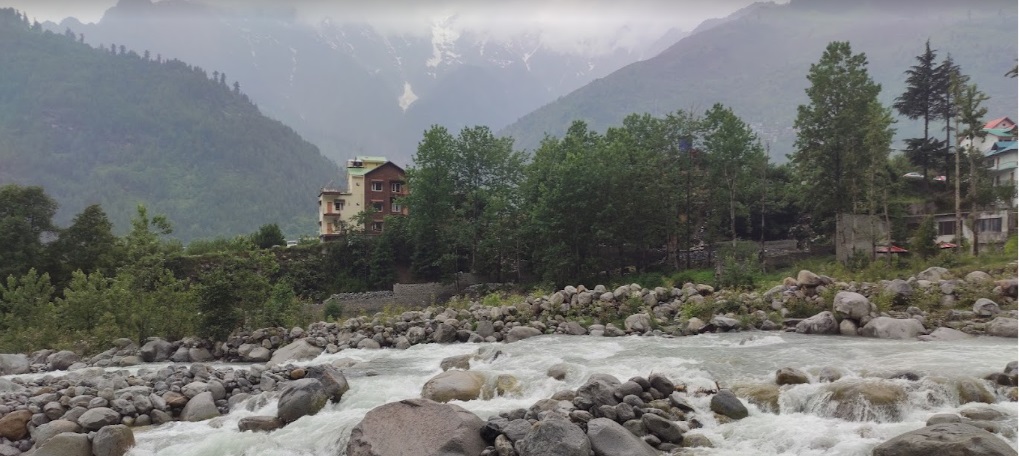
- The Beas River flows gently through the valley, creating picturesque views everywhere you look.
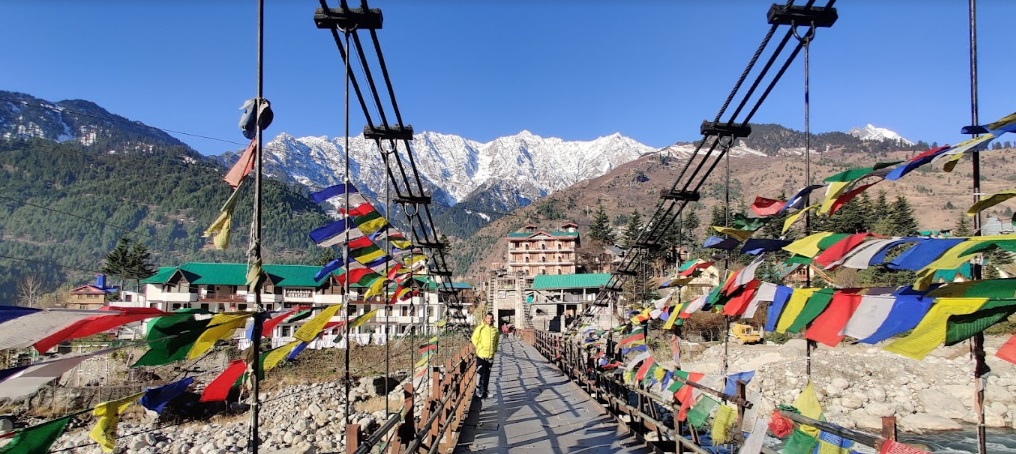
- From green meadows to majestic mountains, Manali is a treat for the eyes and soul.
- Adventure Activities:
- Try paragliding, skiing, river rafting, and trekking.
- Solang Valley and Rohtang Pass are hotspots for adventure lovers.
- Cultural Experiences:
- Visit the Hadimba Temple, an ancient wooden shrine surrounded by cedar forests.
- Explore the Manu Temple and Vashisht Hot Springs for a touch of spirituality and relaxation.
- Local Cuisine & Shopping:
- Enjoy local Himachali dishes like Siddu, Trout fish, and Chana Madra.
- The Mall Road is perfect for shopping woolens, handicrafts, and souvenirs.
- Perfect All-Year-Round Destination:
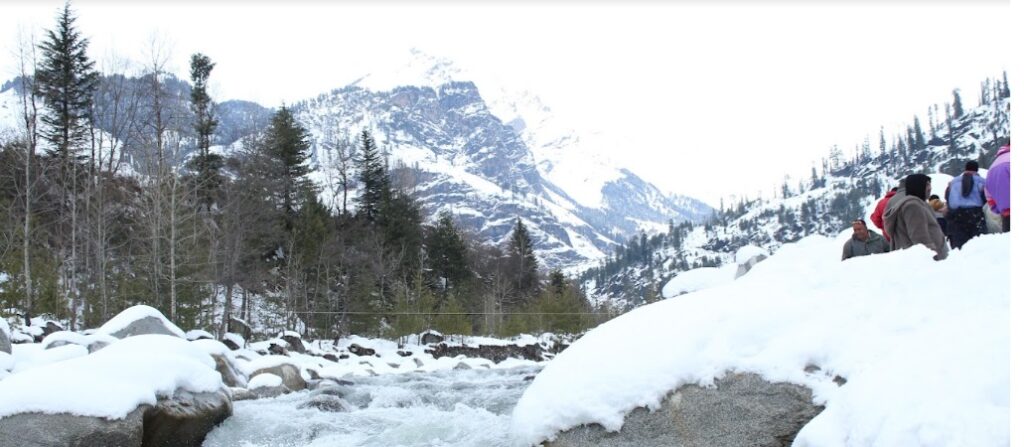
- Whether you enjoy snow in winter, flowers in spring, or green valleys in summer, Manali welcomes visitors all year.
Top Places to Visit in Manali:
- Solang Valley
- Rohtang Pass
- Old Manali
- Jogini Waterfall
- Nehru Kund
- Manali Wildlife Sanctuary
Best Time to Visit:
- Summer (March to June): Perfect for sightseeing and outdoor activities.
- Winter (October to February): Ideal for snow lovers and honeymooners.
How to Reach:
- By Road: Well-connected by buses from Delhi, Chandigarh, and Shimla.
- By Train: Nearest railway station is Joginder Nagar (146 km).
- By Air: Nearest airport is Bhuntar (50 km).
Conclusion:
Manali is not just a destination – it’s an experience. Whether you seek adventure, peace, or a romantic escape, this Himalayan gem offers it all. Pack your bags and get ready to create unforgettable memories in the serene lap of nature.
🌄 Top Places to Visit in Manali
1. Solang Valley
Location: 13 km from Manali
Highlights: Adventure sports, snow activities, scenic views
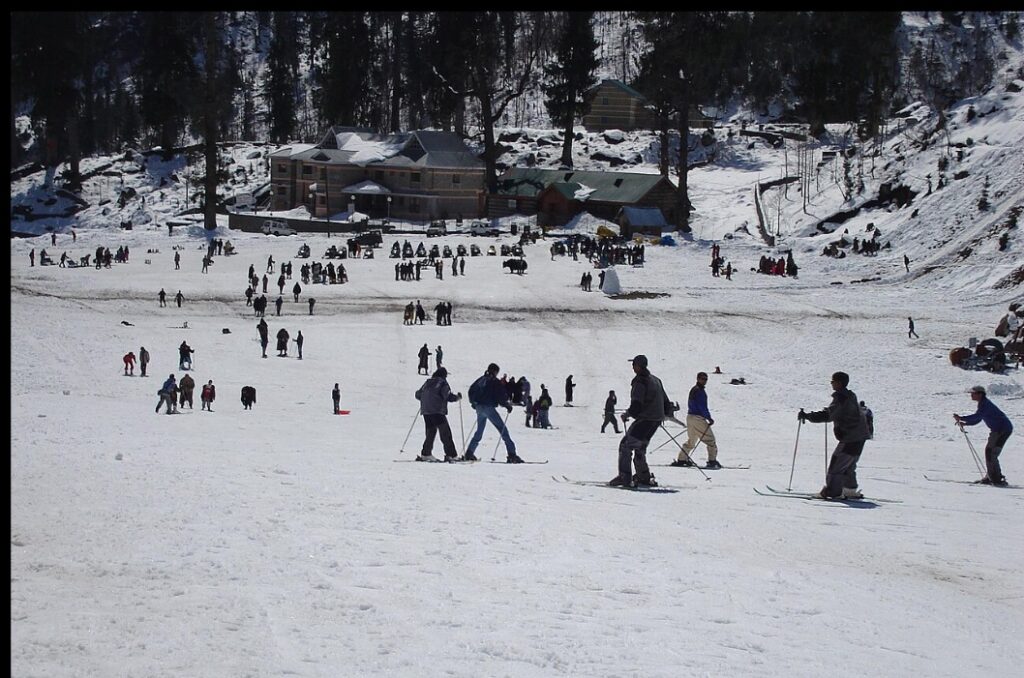
Solang Valley is a must-visit destination for adventure lovers. Surrounded by majestic glaciers and snow-capped peaks, it transforms into a winter sports hub in the colder months and a paragliding paradise in summer.
Things to Do:
- Paragliding, skiing, zorbing, snowboarding
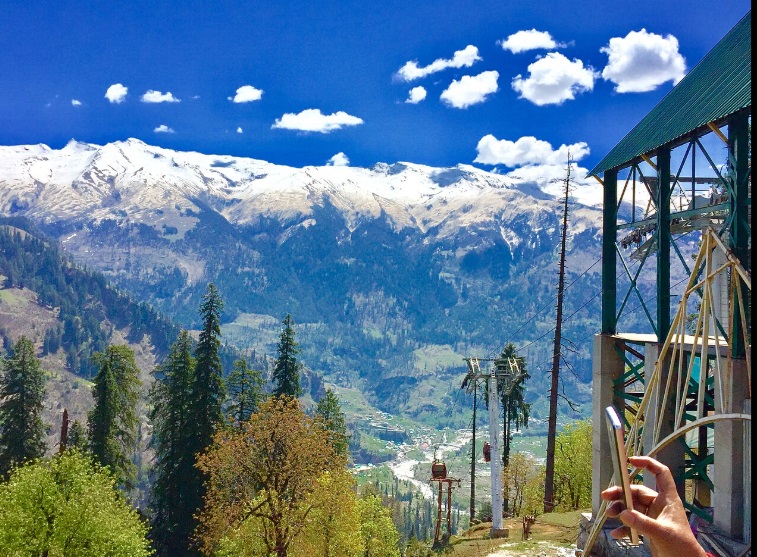
- Ride the Solang Ropeway for a panoramic view
- Snowmobile and ATV rides in winter
Best Time to Visit:
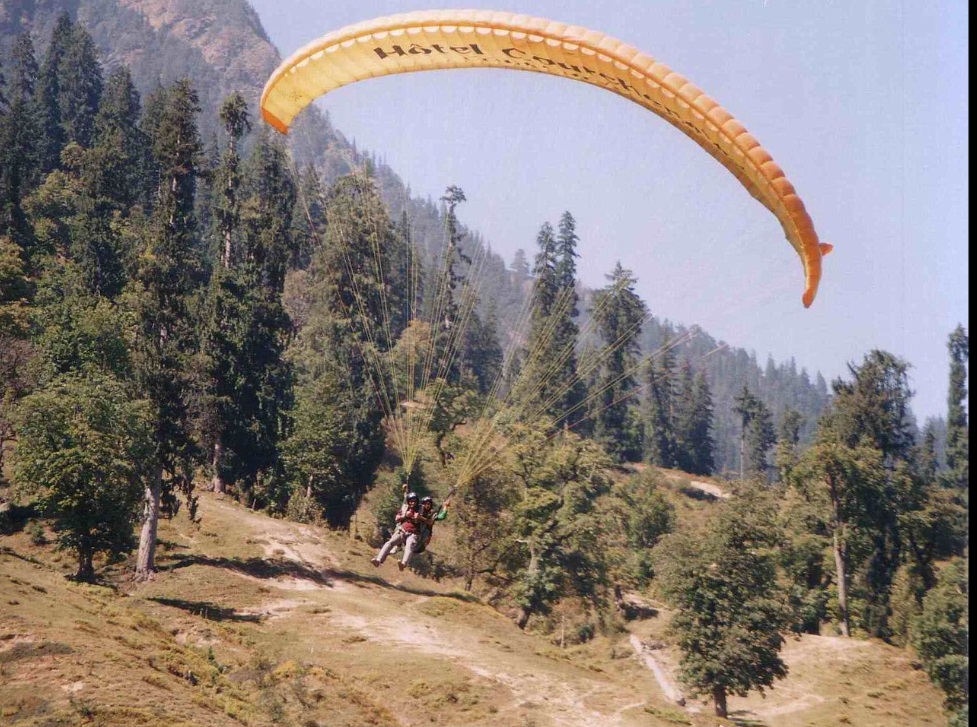
- Summer (April–June) for paragliding
- Winter (December–February) for snow sports
Solang Valley, a popular tourist destination in Manali, Himachal Pradesh, is known for its stunning natural beauty and adventure activities. It’s a side valley at the top of the Kullu Valley, located 14 km northwest of Manali on the way to Rohtang Pass. Solang Valley is a popular spot for both summer and winter sports, with activities like paragliding, paratrooping, and zorbing available year-round.
Key Features:
- Location: Situated in Manali, Himachal Pradesh, 14 km from Manali town.
- Elevation: Located at an altitude of 8,500 feet, offering breathtaking views of snow-capped mountains and glaciers.
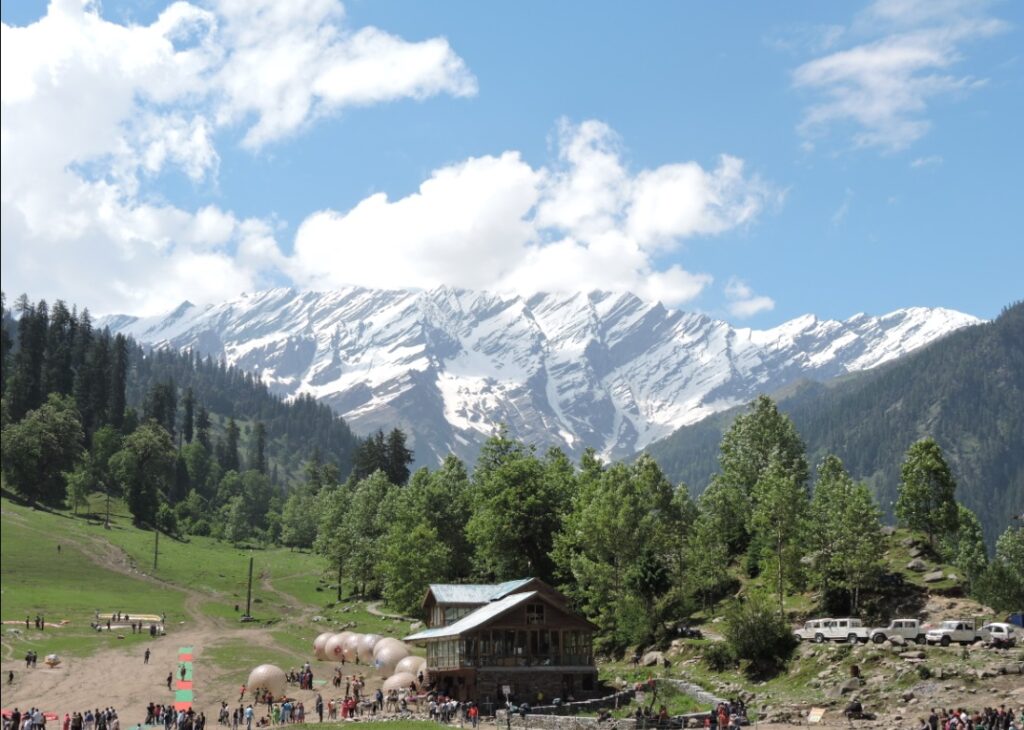
- Natural Beauty: Features rolling meadows, thick timberlands, and the winding Beas River.
- Adventure Activities: Offers paragliding, paratrooping, zorbing, and other adventure sports.
- Winter Sports: Popular during winter for skiing, skating, and enjoying the snow.
- Year-Round Tourist Spot: Attracts visitors throughout the year for both natural beauty and adventure.
Getting There:
- Road: Solang Valley is well-connected to Manali by road.
- Air: The nearest airport is Kullu-Manali Airport (Bhuntar), about 63 km away.
- Train: The nearest railway station is Joginder Nagar, about 175 km away.
Things to Do:
- Paragliding: Soar high above the valley for stunning views.
- Zorbing: Roll down the slopes in a giant inflatable ball.
- Paratrooping: Experience the thrill of parachuting.
- Skiing and Snowboarding: Enjoy the snow-covered slopes during winter.
- Ice Skating: Glide across the ice during the colder months.
- Horse Riding: Explore the valley on horseback.
- Trekking: Enjoy the scenic trails and surrounding nature.
- Visit Hadimba Temple: A significant religious site with beautiful architecture.
- Enjoy Tea: Known for the tea sold at various locations within the valley.
2.Rohtang Pass
The pass provides a natural divide between the Kullu Valley with a primarily Hindu culture (in the south), and the arid high-altitude Lahaul and Spiti valleys with a Buddhist culture (in the north). The pass lies on the watershed between the Chenab and Beas basins. On the southern side of this pass, the Beas River emerges from underground and flows southward[6] and on its northern side, the Chandra River (flows from the eastern Himalayas), a source stream of the river Chenab, flows westward.
The pass is open from May to November. It is not particularly high or difficult to cross on foot by Himalayan standards, but it has a well-deserved reputation for being dangerous because of unpredictable snowstorms and blizzards.[7]
This pass is an ancient trade route between the people on either side of Pir Panjal. There are many other passes in Lahaul and Spiti which have specific names (Kunzam La, Baralacha La, etc.). This is suggestive of the fact that this must have been the oldest and most frequented pass in the region, or the fact that it is the main pass leading from one cultural region to another, quite different one, to the north. The name Rohtang comes from Persian/ Farsi words Ruh+ Tang which means pile of dead bodies.[8]
The former National Highway 21 (NH 21, now numbered NH 3), the road through the Kullu Valley, terminates at Manali. The road northwards over the Rohtang Pass to Keylong in Lahaul and Spiti district and on to Leh in Ladakh is not a national highway. Nonetheless, the Leh-Manali Highway has become very busy during the summer months as an alternate military route since the Kargil Conflict in 1999. Traffic jams are common as military vehicles, trucks, and goods carriers try to navigate the tight roads and rough terrain, compounded by snow and ice at certain points and the large number of tourist vehicles.

Several episodes of the History Channel’s Ice Road Truckers series spinoff IRT Deadliest Roads dealt with truckers crossing the Rohtang Pass to deliver supplies.[9][10] With increase in Traffic at Rohtang Valley, environmentalists fear its impact on the fragile mountain ecology. A rise in average temperature, and the consequent melting of glaciers, are also issues of severe concern.[11]
Road tunnel under the Pass
[edit]
Main article: Atal Tunnel
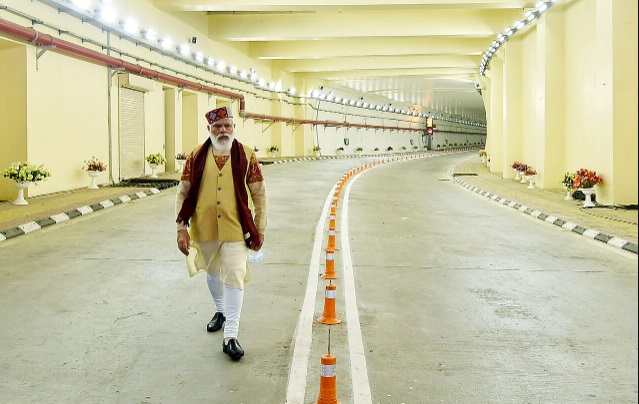
As the pass gets blocked by snow and the road over the pass closes from November to May rendering Lahaul and Spiti districts north of the pass inaccessible, a need was felt to build a tunnel under the pass. The project was announced by the then Prime Minister Atal Bihari Vajpayee on 3 June 2000. The work was started by BRO on 6 May 2002. The foundation stone of the project was laid on 28 June 2010 by Sonia Gandhi in her capacity as the Chairperson of National Advisory Council. The road tunnel called Atal Tunnel has been excavated and became operational on 3 October 2020 after formal inauguration by Prime Minister Narendra Modi. It obviates the need to travel over the Rohtang Pass. While it takes 4 to 6 hours to ascend, negotiate and descend the Rohtang Pass, travel through the Rohtang Tunnel takes only about 30 minutes.
Gallery
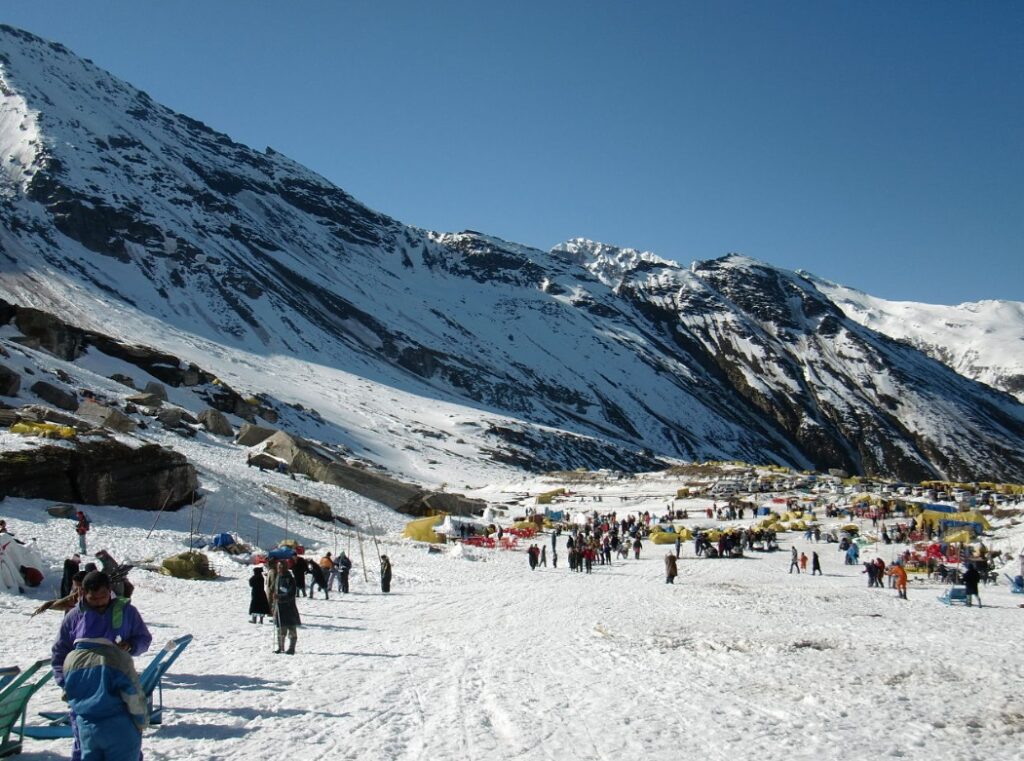
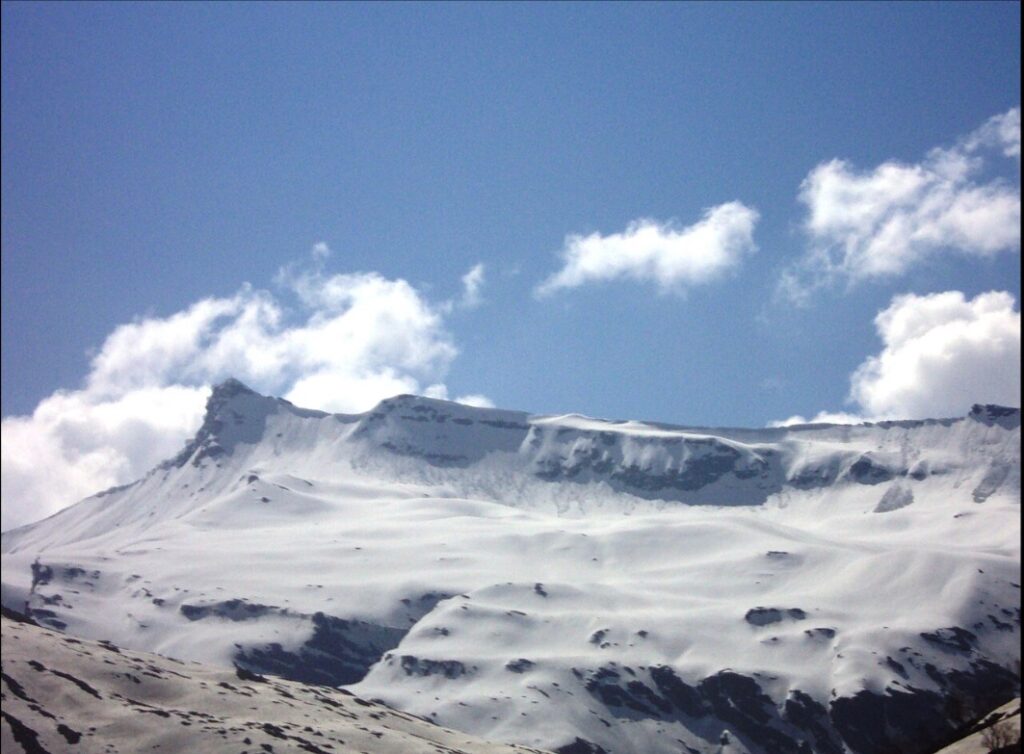
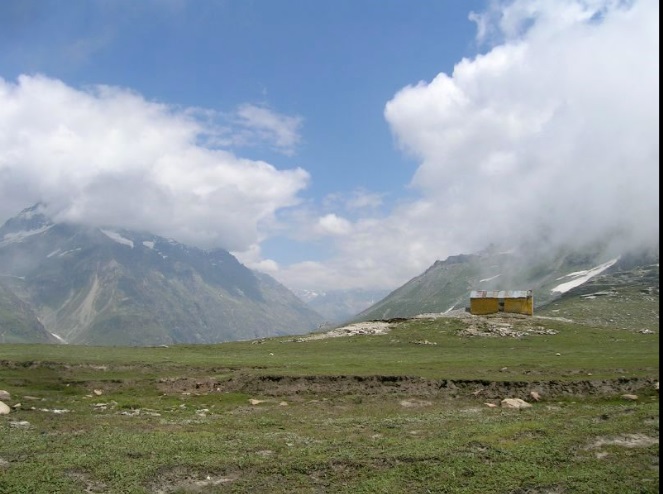
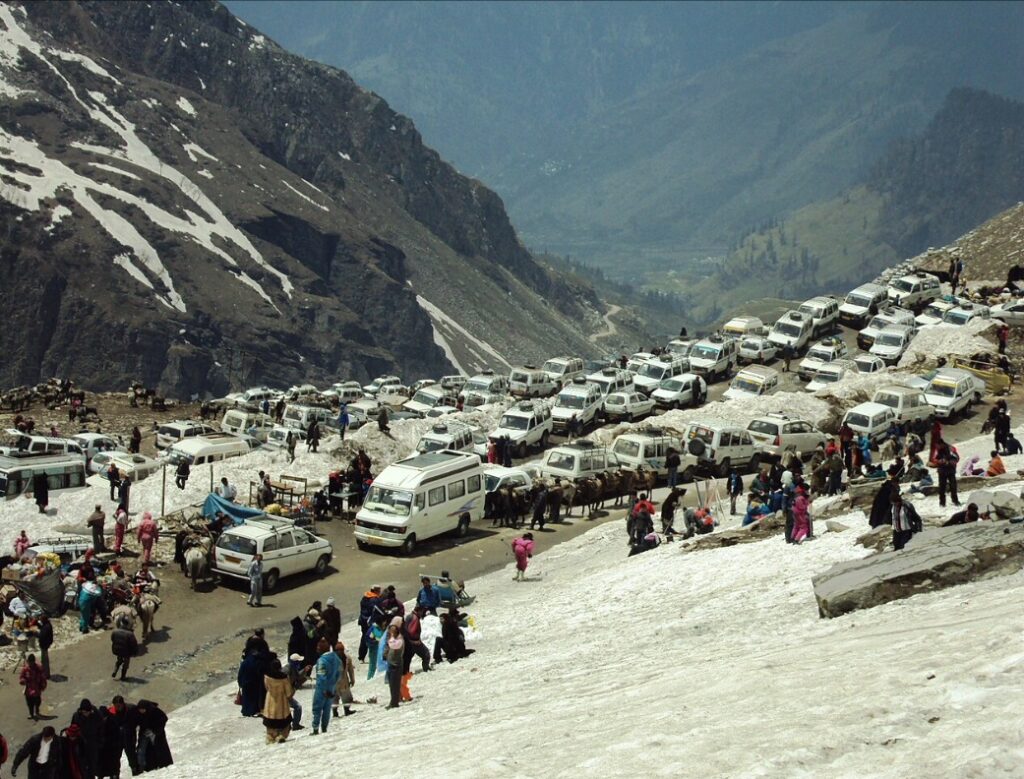
- Winter sports
- A panoramic view of distant Himalayan peaks from Rohtang Pass, May 2009
- Mountains near Rohtang Pass
- Leh-Manali Highway as seen from near the Rohtang Pass
- Tourist Vehicles at Rohtang Pass, May 2009
- A view of Dhabas (road-side eateries) at Marhi and Leh-Manali Highway on the way to Rohtang Pass, May 2009
- View from top of Rohtang
- Traffic jam descending from Rohtang, 2004
- Summit of Rohtang Pass 13,000 ft above Sea Level, October 2007


3. Jogini Waterfall
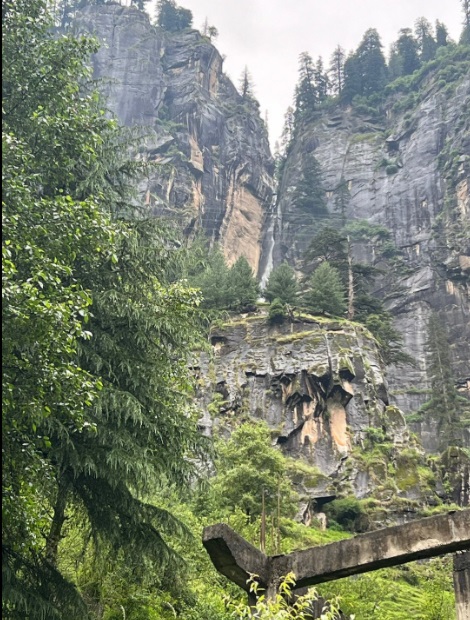
This is one of the largest waterfalls u can see in Manali when going towards Solang valley. It is a good place if u r travelling solo or with young members then this a beautiful place. The area River and forest around the waterfall or seen as sacred. Due to it. Being a place where one of the Shakti Peethas fell making it a place of feminine power
The place can be trekked individually and u need at least two hours Treeking time to reach the waterfalls
Do visit if u r travelling individually or in groups without kids and ladies
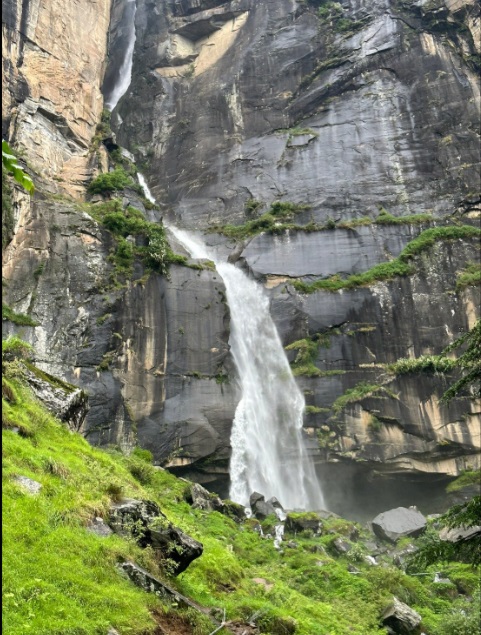
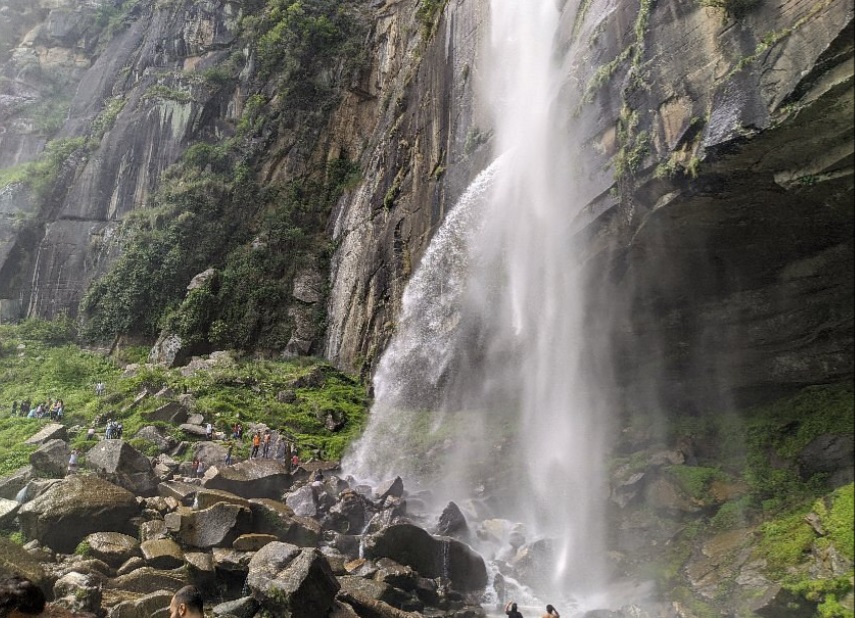
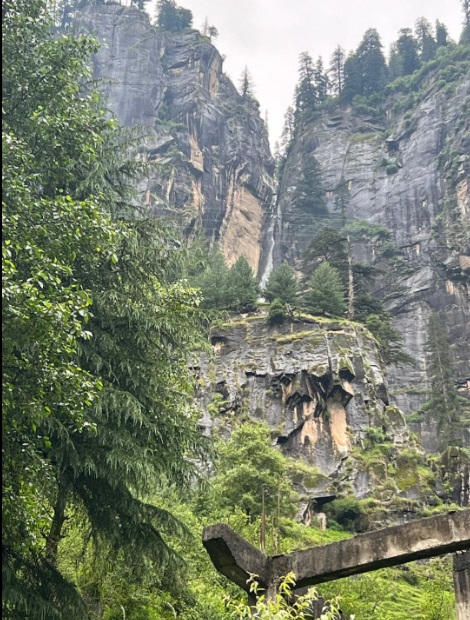
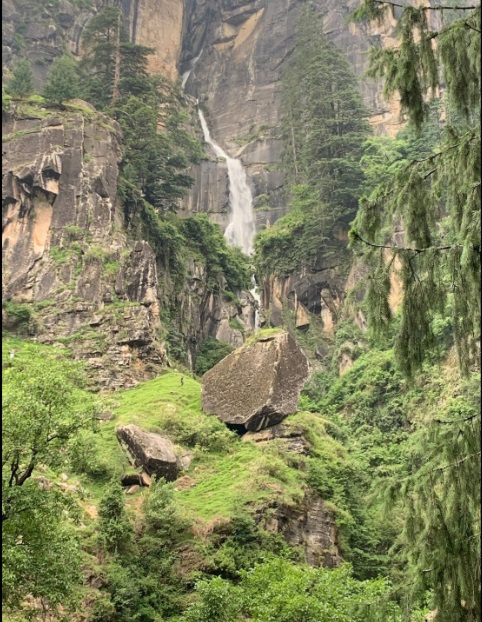
Location: 3 km trek from Vashisht Temple
Highlights: Nature trail, hidden gem, peaceful waterfall
Jogini Waterfall is a hidden treasure for those who love trekking and nature. The hike takes you through apple orchards, pine forests, and small villages before revealing a stunning waterfall.
Things to Do:
- Take a peaceful trek (easy to moderate difficulty)
- Enjoy a picnic near the base of the waterfall
- Capture beautiful nature shots
Best Time to Visit:
March to June for a pleasant trek, July to September for lush greenery
4. Old Manali
Location: 3 km uphill from main Manali town
Highlights: Laid-back vibes, cafes, apple orchards, rustic charm
Old Manali offers a peaceful escape with narrow lanes, cozy cafes, and traditional wooden houses. It’s ideal for backpackers, solo travelers, and those seeking serenity.
Things to Do:
- Chill at riverside cafes like Café 1947 and Sunshine Café
- Visit the Manu Temple – believed to be the home of the first man in Hindu mythology
- Explore local markets for handmade goods and boho fashion
Vibe: Calm, artistic, and perfect for long stays
5.Nehru Kund
Location: 6 km from Manali on the Leh-Manali Highway
Highlights: Natural spring, peaceful environment
Named after India’s first Prime Minister, Jawaharlal Nehru, who used to drink water from this spring, Nehru Kund is a crystal-clear natural spring emerging from underground rocks.
Things to Do:
- Relax and enjoy the peaceful sound of flowing water
- Ideal for a short stop during your drive to Solang or Rohtang
- Great spot for photography